AI alone doesn't build good digital products.
We show product, UX, and dev teams how to put AI to productive use in building digital products and services. Our Design-to-Code framework connects UX, development, and domain expertise — for more productivity and a safe, controlled path from idea to code.
What is Design-to-Code? Free lunch talk on Thursday, October 15, 12:30–1:00 PM CEST
What is Design-to-Code?



The problem
AI makes development faster. Not automatically better.
AI can generate mockups and code in seconds today. But speed doesn't replace product decisions.
When requirements are incomplete or unclear, AI fills the gaps with its own interpretation. The result: applications whose logic, quality, and underlying decisions are hard to trace later on.
The problem isn't that AI can't do enough.
The problem is that teams need to know how to use AI the right way.
Only25%of companies actually bring one of their AI pilots into production.Source: Deloitte, State of AI in the Enterprise, 2026
AI holds enormous productivity potential. What many teams lack is the competence to capture that potential safely, with users in mind, and under control.
Our approach: The Design-to-Code Framework
A framework for a new way of building digital products.
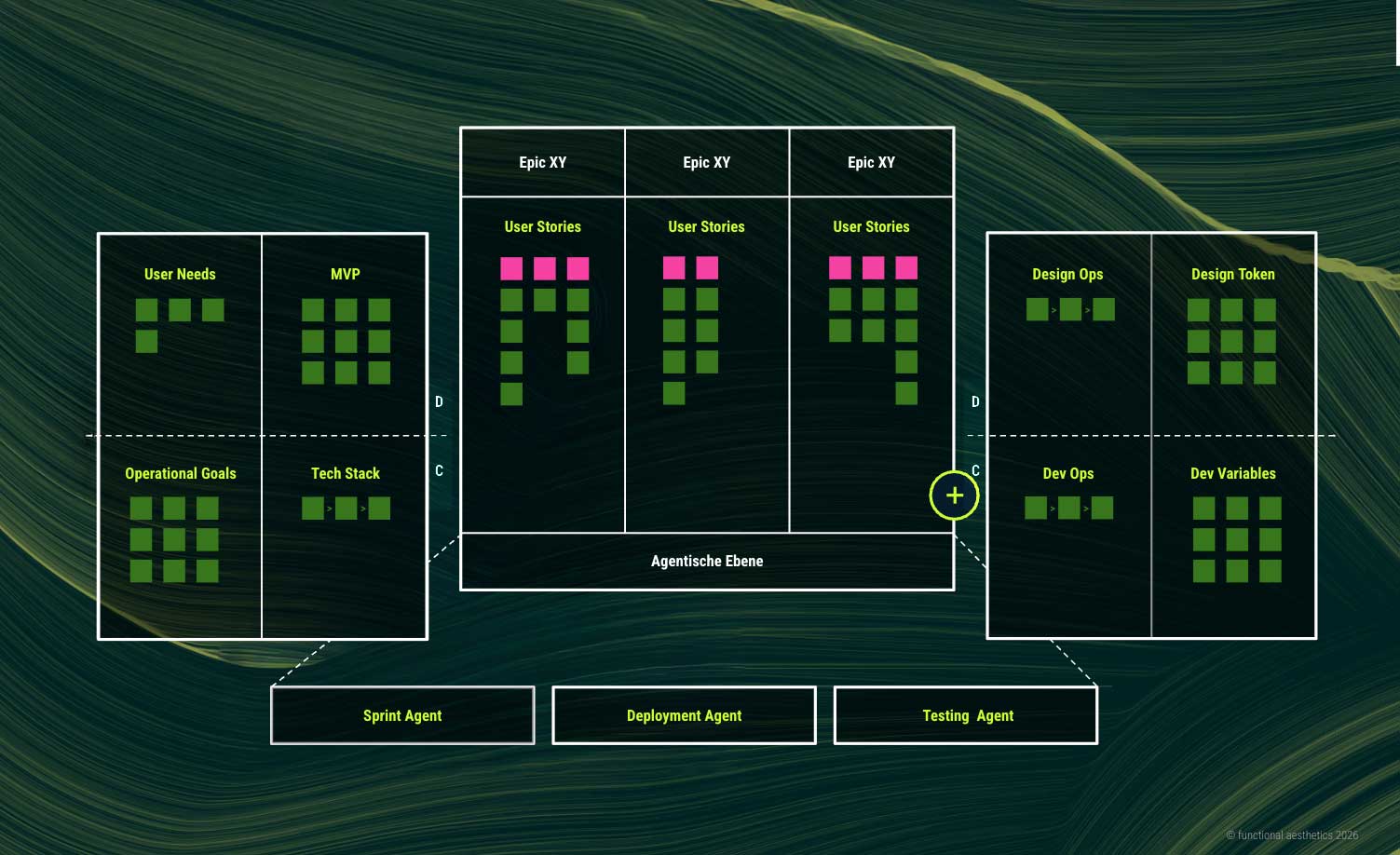
The Design-to-Code (DtC) framework connects product, UX, development, and domain expertise, and structures the collaboration between humans and AI — from idea to code. The framework can be used as an analog low- and high-fidelity canvas or with our software.
Human Stage Gates ensure that you make the decisions, that requirements stay verifiable, and that your application can evolve iteratively.
What we offer
How Design-to-Code comes to your team.
The framework is the method. Workshops and trainings are how teams learn it and apply it in practice.
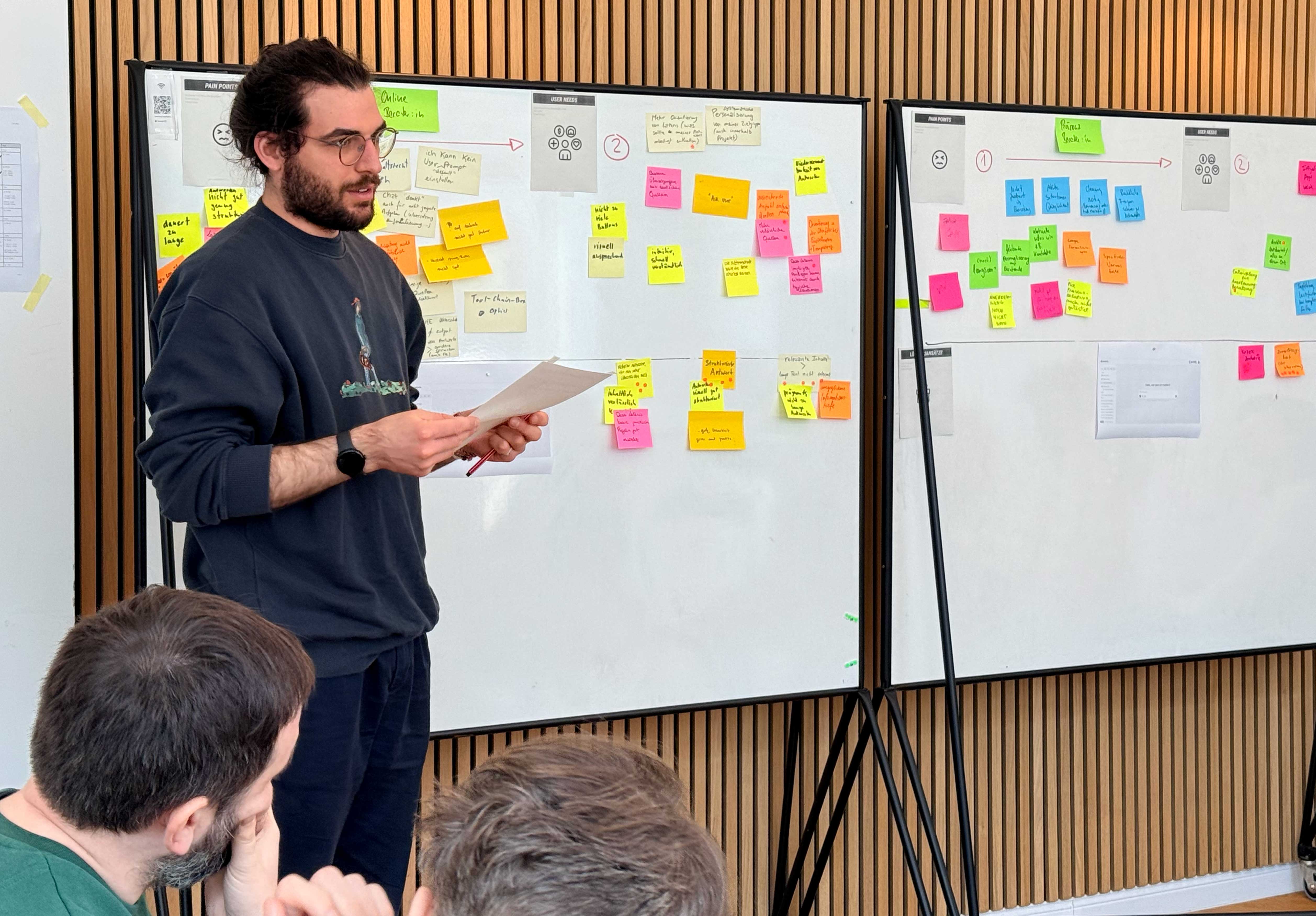
Workshop
From idea to working application in 2 days.
Learn the framework and apply it directly to your own project — no concept paper, but a real application after 2 days.
View details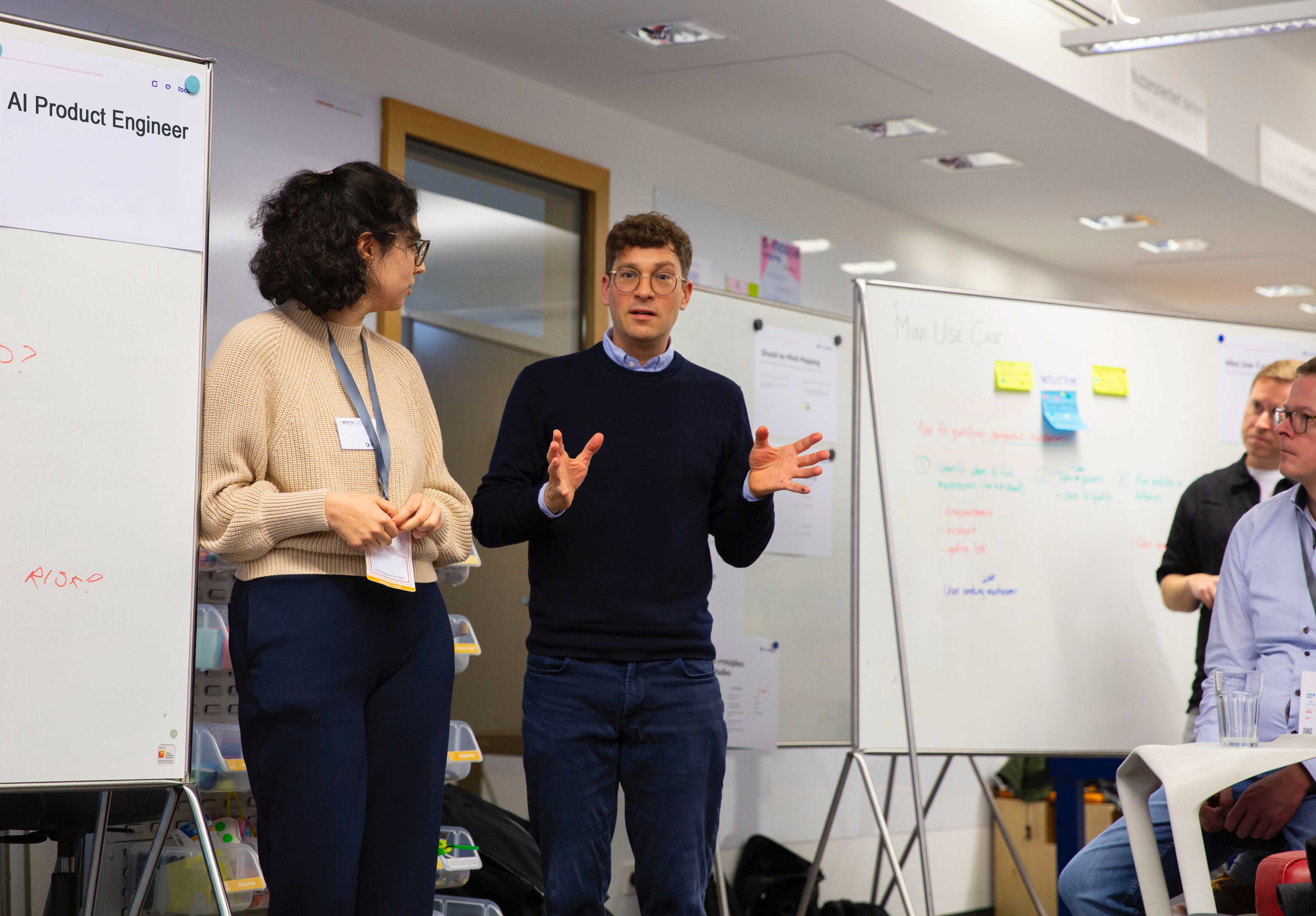
Corporate Training
Training your team as AI Product Engineers.
8 modules, spread over [placeholder: confirm timeframe], alongside your job. You become the role that steers AI-driven development.
Get in touch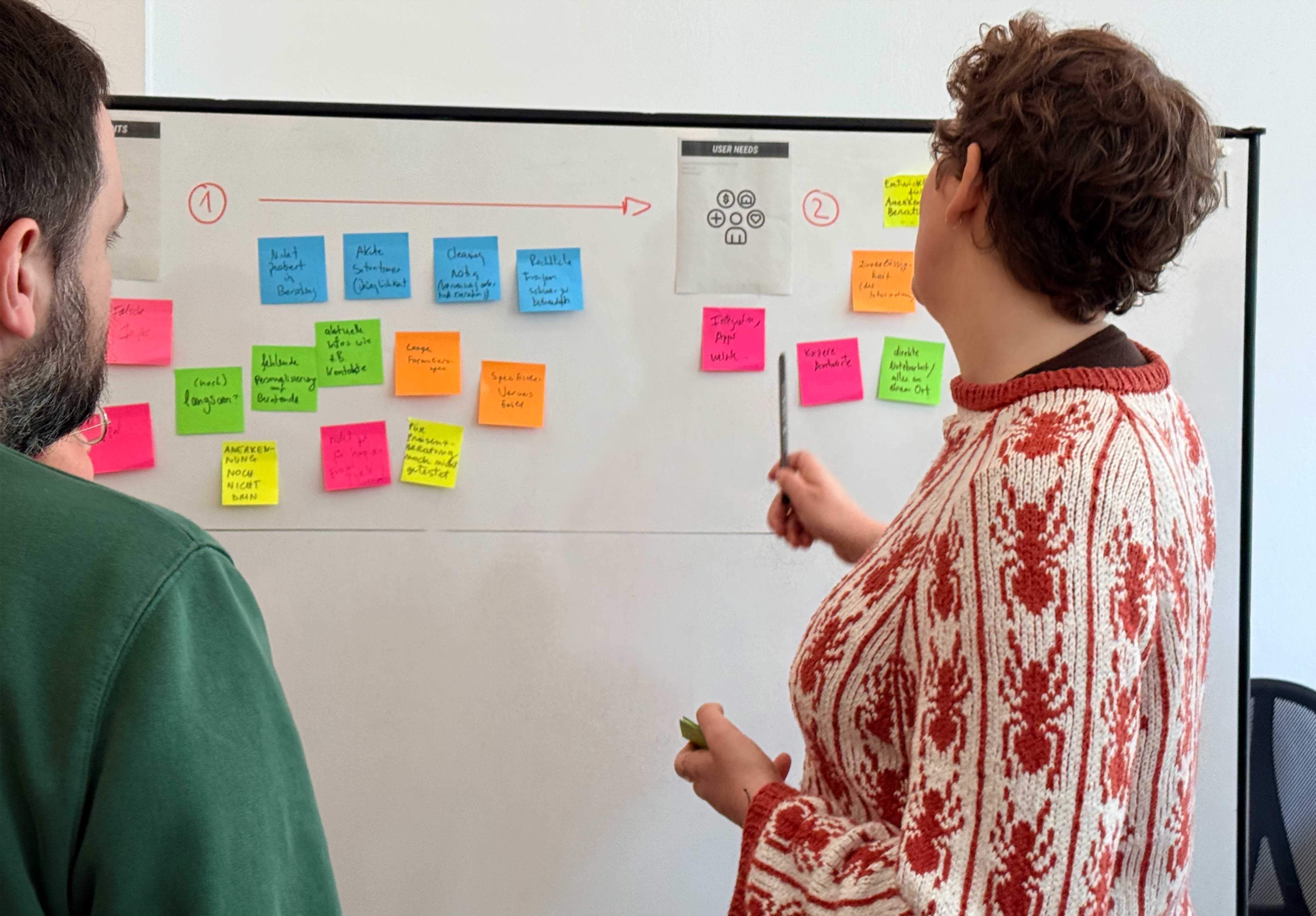
Materials
Use the Design-to-Code Framework.
Use the DtC framework as a printable canvas, plus helpful checklists for applying it.
Download materialsThe outcome
During the workshop you work on your own, real project and turn it into a working application. You leave with three things:
1. A working application
Not a theoretical example or a throwaway prototype, but an outcome from your own project.
2. A transferable process
A clear process with Human Stage Gates that you can apply to further projects.
3. New competence in the team
Your team doesn't just know what AI can do — they know how to use AI safely and productively for their own product development.
Explore the modules
Design-to-Code wasn't built on a drawing board.
The framework is based on more than 15 years of experience building digital products and services — combining expertise from product ownership, UX, and development with current AI practice.
We've translated that experience into eight modules. They form the foundation of our workshops and trainings.
Arriving in the structure
M1 · The interpretation problem of LLMs, the new role of the AI Product Engineer, and the human-in-the-loop principle.
Who we're building for
M2 · Industry-specific input from your field. Defining user needs and user journeys.
The Design-to-Code Framework
M3 · Understand the five layers and learn to work with them.
From prompt to code
M4 · Learn to apply agentic dev and design-ops practices. Correctly define requirements for your project.
Control and human in the loop
M5 · How does the Human Stage Gate process work? Learn how to stay in control during implementation.
The idea becomes real
M6 · Building your digital application using the tool or software stack preferred by you or your organization.
Maintenance and scaling
M7 · Learn iterative work with AI tools — how the DtC structure helps you build on what's already built and evolve it sensibly.
Reviewing the goals
M8 · Here we test hypotheses and validate the applications we built. We practice how to pass on what we learned to colleagues and other departments.
The team and coaches
Great AI-powered products don't come from AI alone. They emerge where product understanding, user focus, technical skill, and domain expertise come together.
Our team combines these perspectives and brings them into a shared development process.

Tommy Haacke
UX Consultant & DtC Coach, Founder & Principal, userdoo

Dipl. Des. Simone Heissel
DtC Coach, UX Director, functional aesthetics

Dipl. UX-Des. Chris Bleuel
AI Consultant & DtC Coach, CEO functional aesthetics

Katharina Winter
Co-Founder, Responsible Design

Dipl. Inf. Thorsten Jonas
Co-Founder Kollektiv17
"The AI Product Engineer will play a decisive role in implementing digital solutions within companies. The Design-to-Code framework teaches the skills needed for this in a unique way."
Ready to put AI to productive use in your product development?
Let's talk about how we can tailor Design-to-Code to your needs.
Thanks for your message!
We'll get back to you shortly.